
Contact Us

Silica Aerogel: The Rise of a New Material
Silica (SiO₂) aerogel, often called “frozen smoke,” is currently the world’s lightest solid material with the best thermal insulation properties. Its core characteristics stem from its unique nanoporous network structure.
The Four Core Properties of Silica Aerogel:
1.Exceptional thermal insulation performance (ultra-low thermal conductivity)
This is the most renowned characteristic of aerogels. Their thermal conductivity typically ranges between 0.013 ~ 0.020 W/(m·K), significantly lower than that of stationary air at room temperature (approximately 0.026 W/(m·K)).

- Infinite-length pathways: The nanoscale solid framework is extremely fine and features tortuous pathways, significantly restricting solid thermal conduction.
- Nanopore Effect: The pore size of aerogels (20–50 nm) is smaller than the mean free path of air molecules (approximately 70 nm), preventing convection within the pores and thereby blocking gas-phase heat conduction.
2.Extremely high porosity and ultra-low density
Aerogels consist of approximately 90% ~ 99.8% air by volume, which gives them physical properties similar to air:
- Density: Extremely lightweight, typically ranging from 3 – 50 kg/m³. The lightest aerogels have a density only about three times that of air.
- High specific surface area: The internal surface area per gram of aerogel can reach as high as 500–1200 m²/g (making it highly promising for applications in catalyst supports and adsorption).
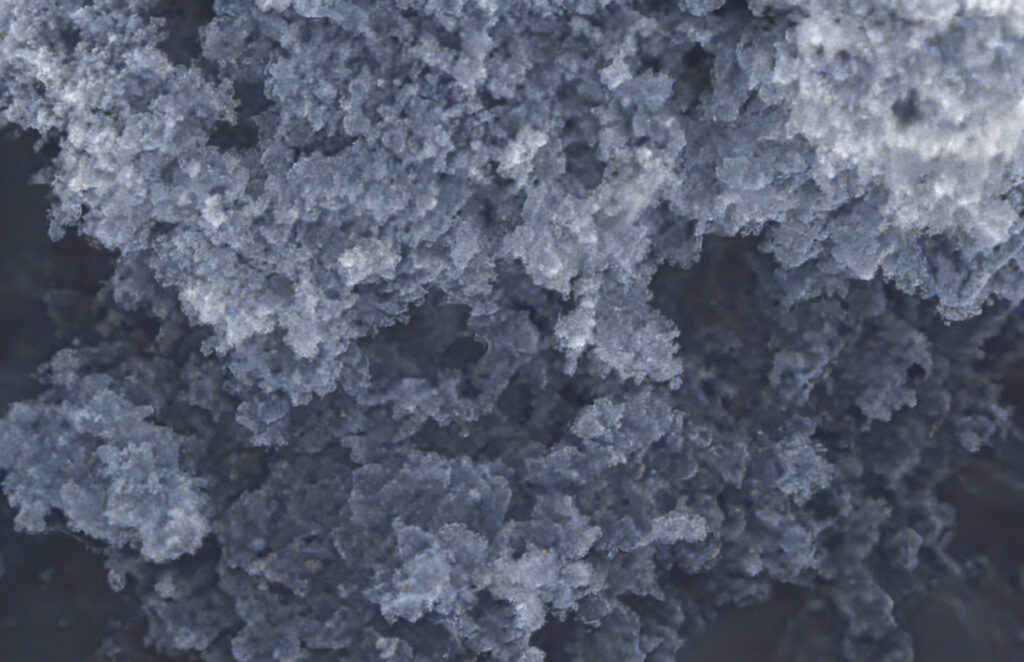
3.Superior optical and acoustic properties
- Optical transparency: Due to its structural dimensions being far smaller than the wavelength of visible light, silica aerogel exhibits minimal light scattering and appears translucent with a pale blue hue (Rayleigh scattering effect), earning it the nickname “solid cloud.”
- Low-speed sound conduction: Sound waves propagate at extremely low velocities within it (as low as 100 m/s), making it an exceptional acoustic impedance matching material and sound insulation material.
4.Stability and Safety
- High-temperature resistance: Pure silica aerogel exhibits a high melting point, maintaining stability below 650°C. Specially modified composite materials can withstand temperatures exceeding 1200°C.
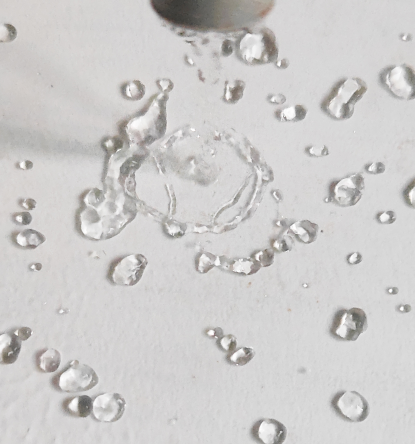
- Hydrophobicity: Modern processes typically involve surface modification to impart superhydrophobic properties, achieving contact angles exceeding 150°. This prevents moisture absorption-induced structural collapse and extends service life.
These properties make silica aerogel indispensable in fields such as aerospace (e.g., thermal insulation for spacesuits), industrial energy conservation (pipe insulation), building materials, and environmental adsorption.